International Hockey Rink Size: IIHF vs NHL
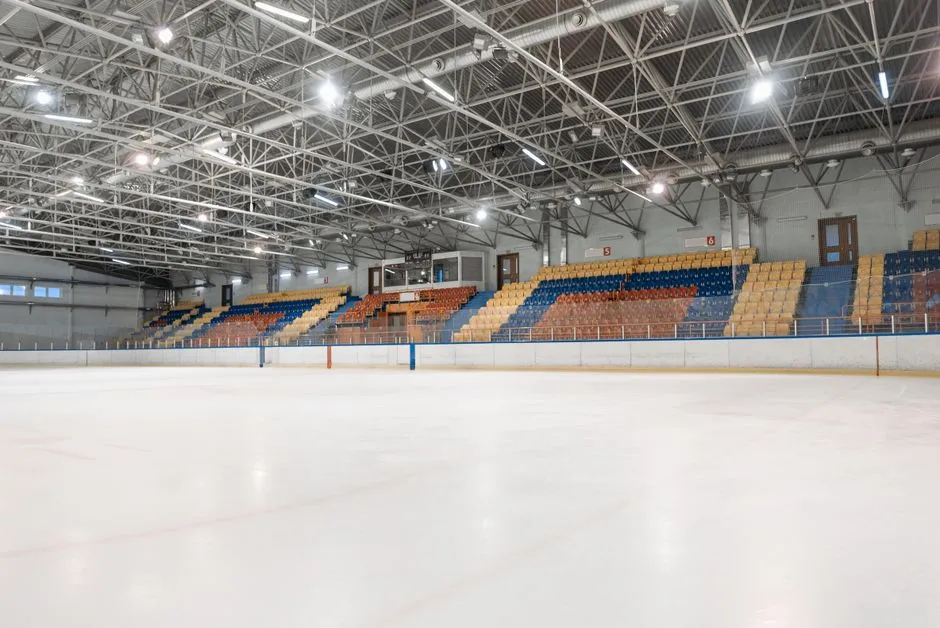
- The “international rink” has more than one width
- Recompute the comparison before repeating it
- Why the old Olympic-size shorthand lingers
- Width changes the map, not the laws of physics
- Length is not the only other difference
- IIHF rules and NHL rules are different authorities
- What “Olympic ice” means now
- How to watch the difference without inventing causation
- A fan's pregame dimension checklist
- The accurate short answer
The “international rink” has more than one width
Rule 1.2 of the current IIHF rule book specifies an official rink 60 metres long and 26 to 30 metres wide, a continuous permitted width range; deviations require IIHF approval. The NHL specifies 200 feet by 85 feet, exactly 60.96 metres long and approximately 25.91 metres wide.
That means a 60×26 m IIHF rink is close to NHL width, while a 60×30 m rink is roughly four metres wider. “International ice is always huge” was once useful shorthand. Today it is useful mainly for discovering who has not opened the current rule book.
The basic comparison is:
| Layout | Metric dimensions | Imperial dimensions |
|---|---|---|
| IIHF maximum-width endpoint | 60×30 m | About 196.85×98.43 ft |
| IIHF minimum-width endpoint | 60×26 m | About 196.85×85.30 ft |
| NHL | 60.96×25.91 m | 200×85 ft |
The IIHF figures come from Rule 1.2 and the rink diagrams in the 2025/26 IIHF Official Rule Book. The NHL figures come from its official rule-book rink diagram. Both documents are dated editions. For a future event, check the latest applicable book and event rules.
Recompute the comparison before repeating it
Unit conversion is where innocent rink articles acquire strange extra feet. Using 1 metre = 3.28084 feet:
- 60 m is approximately 196.85 ft;
- 30 m is approximately 98.43 ft;
- 26 m is approximately 85.30 ft;
- 200 ft is exactly 60.96 m;
- 85 ft is approximately 25.91 m.
A 60×30 m rink is therefore about 13.43 ft, or 4.09 m, wider than an 85 ft NHL surface. It is also about 3.15 ft, or 0.96 m, shorter in nominal length.
A 60×26 m rink differs much less: about 0.30 ft wider and 3.15 ft shorter than the NHL nominal dimensions. Those are dimension comparisons, not measurements of a specific building. Board thickness, corners, line placement, benches, and approved adaptations affect what a player actually sees.
If a venue advertises “Olympic size,” ask for dimensions. The phrase may refer to 60×30 m, but a marketing adjective is not a calibrated tape measure.
Why the old Olympic-size shorthand lingers
For years, viewers commonly contrasted the wider international surface with the narrower NHL rink. Many memorable World Championships and Olympic tournaments reinforced that picture. Commentators discussed the extra lateral space, and “Olympic-sized ice” became a ready-made explanation for tactical differences.
Then elite international events increasingly appeared on narrower ice. Current IIHF material permits widths across the continuous 26–30 m range; 60×26 m and 60×30 m are the endpoints, not the only legal layouts. Host arenas, event requirements, spectator capacity, sightlines, existing buildings, and competition policy all influence which approved surface is used.
That does not mean the wide rink vanished. It means the governing question changed from “What size is international ice?” to “Which approved configuration does this event use?”
The second question is slightly less catchy and substantially more likely to be correct.
Width changes the map, not the laws of physics
On a wider rink, players have more lateral distance between the boards. That can create different spacing problems:
- a forechecker may travel farther to pressure a wide outlet;
- defenders may have more ice to protect away from the puck;
- puck carriers can use wider entries and support routes;
- east-west passes may travel farther and remain exposed longer;
- the boards are farther from central lanes, changing where “safe” space appears;
- line changes and bench-side decisions can feel different depending on placement.
None of those tendencies guarantees a style. A team can play compactly on wide ice or aggressively on narrow ice. Coaching, opponent, score, roster, officiating, and fatigue all matter. Width creates options and costs; people decide what to do with them.
The phrase “more space means more scoring” is especially unreliable. Extra room can open passing lanes, but it can also make dangerous central ice harder to reach, give defenders recovery angles, or encourage possession farther from the net. Goals depend on chances, finishing, goaltending, special teams, and context. The rink does not owe anybody a 6–5 thriller.
Length is not the only other difference
Comparing 60×30 with 200×85 can make the outer rectangle look like the whole issue. It is not. Rule books also define:
- corner radii;
- goal-line distance from the end boards;
- blue-line and neutral-zone placement;
- faceoff spots and circles;
- goal crease shape and dimensions;
- trapezoid or goalkeeper-restricted areas where applicable;
- board, glass, door, bench, and penalty-box requirements.
Two surfaces with similar width can still play differently when line locations and corners change usable geometry. A more rounded corner returns pucks differently than a tighter one. A shifted blue line changes offensive-zone depth. A goalkeeper rule can influence retrieval even if the ice rectangle is identical.
For spectators, the practical lesson is to look at the current markings, not merely the venue's floor plan. For builders and organizers, the lesson is sterner: consult the entire applicable technical specification and approval process. A four-row comparison table is not construction guidance.
IIHF rules and NHL rules are different authorities
The IIHF governs its competitions through its rules, regulations, and event documents. The NHL governs NHL games through its own rule book. Similarity between provisions does not make either document a universal hockey code.
This matters when a player moves between competitions. The rink may be familiar while details of icing, faceoffs, equipment, video review, penalties, or overtime differ. It also matters when a broadcaster casually says “international rules” during an event organised under a particular federation or hybrid arrangement.
Use a simple source ladder:
- Identify the competition, season, and event.
- Find its official tournament information or regulations.
- Find the applicable playing rule book and edition.
- Check the official venue or event material for rink configuration.
- Treat older diagrams as history, not automatic current fact.
The IIHF's rules and regulations page says the latest published version is the one to use for its events. That is a helpful reminder to readers and a small nightmare for undated infographics.
What “Olympic ice” means now
Olympic hockey uses event-specific information alongside the applicable IIHF framework. It is therefore unsafe to answer “How wide is Olympic ice?” from memory alone.
The correct workflow is:
- identify the Games and men's or women's competition;
- open the official tournament-format or information page;
- confirm which IIHF rule book and regulations apply;
- check venue documentation for the installed surface;
- cite the event, not an inherited nickname.
This is consistent with the broader Olympic hockey timeline: formats, eligibility, and facilities evolve. The rings stay five; the fine print does not.
How to watch the difference without inventing causation
If you want to understand what a rink configuration changes, choose observations before conclusions.
Watch where teams set their forecheck. Note whether the weak-side winger can close the far outlet. Follow how defenders hold the offensive blue line and whether wide support creates clean entries. Compare the time and distance required to move from the boards into the slot. Notice where teams recover dumped pucks and how quickly pressure arrives.
Then add context:
- Are both teams similar in quality?
- Is the score forcing one side to attack?
- Are penalties distorting five-on-five impressions?
- Did roster size, travel, or a short turnaround matter?
- Are you comparing the same rule set and competition stage?
One sequence can illustrate an option. It cannot prove a universal rink effect. A defender being late once may mean the surface stretched coverage—or that the defender was late.
A fan's pregame dimension checklist
Before confidently explaining the ice to everyone within nacho range, check:
| Question | Best source |
|---|---|
| What competition is this? | Official event page |
| Which rule book applies? | Event regulations or information book |
| What are the nominal dimensions? | Current rule book and venue information |
| What width within the 26–30 m range is the event using? | Official event or venue documentation |
| Are overtime and advancement also different? | Tournament-format page |
Our guide to IIHF tournament formats covers that last question. Rink and format are separate variables. A wide surface does not tell you how many points an overtime win earns, just as a standings table does not reveal the corner radius.
The accurate short answer
If someone asks for the international hockey rink size, say: “The current IIHF rule book specifies 60 metres long by 26 to 30 metres wide; check the event and venue for the exact approved width.” If they ask for the NHL size, say: “200 by 85 feet.”
Then, if they still appear interested, explain the tactical possibilities and the dated source. If they have already backed away slowly, you have at least protected them from a rink myth.
The key is not to replace one absolute with another. International hockey is played across different events and facilities. The official measurements are specific; the label is broad. Let the tape measure win.